Discover San Juan Puerto Rico: Where Old World Charm Meets Caribbean Adventure - Pt 1
There are destinations you visit once and cross off your list. Then there are places that keep calling you back. San Juan, Puerto Rico, falls firmly into the second category. It is colorful without trying too hard. Historic without feeling like a museum. Tropical without requiring a passport for most American travelers. Whether you’re arriving on a cruise ship, stepping off a flight from the mainland United States, or beginning a longer Puerto Rican adventure, San Juan has a way of making you feel welcome almost immediately.
The city blends nearly 500 years of history with modern restaurants, beautiful beaches, lively nightlife, and a culture that celebrates family, music, food, and community. Around almost every corner you’ll discover something unexpected—an old fortress overlooking the Atlantic, a tiny café serving incredible coffee, vibrant murals tucked into side streets, or locals gathering in plazas that have been community gathering places for centuries.
One of the things that makes San Juan so appealing is its balance. You can spend the morning walking streets laid centuries ago, enjoy lunch overlooking the ocean, relax on a beach in the afternoon, and finish the evening listening to live salsa music while enjoying authentic Puerto Rican cuisine. Few destinations offer that much variety in such a compact area.
Whether you’re planning a cruise vacation, a romantic getaway, a family trip, or simply looking for somewhere different without complicated international travel requirements, San Juan deserves a place near the top of your list.
Why San Juan Is Different
Unlike many Caribbean destinations where the resort is the main attraction, San Juan feels like a real city first—and that's part of its appeal. People live here, work here, raise families here, and go about their daily lives alongside visitors. Tourism is certainly important, but it hasn't replaced the city's identity. Instead, you're stepping into a place with nearly five centuries of stories, traditions, and culture that continue to shape everyday life.
Founded in 1521, San Juan is the second-oldest continuously inhabited European-established city in the Americas. Long before cruise ships filled the harbor and beachfront hotels lined the coast, Spanish explorers recognized the value of this naturally protected harbor and built a city that would become one of the most important outposts in the New World.
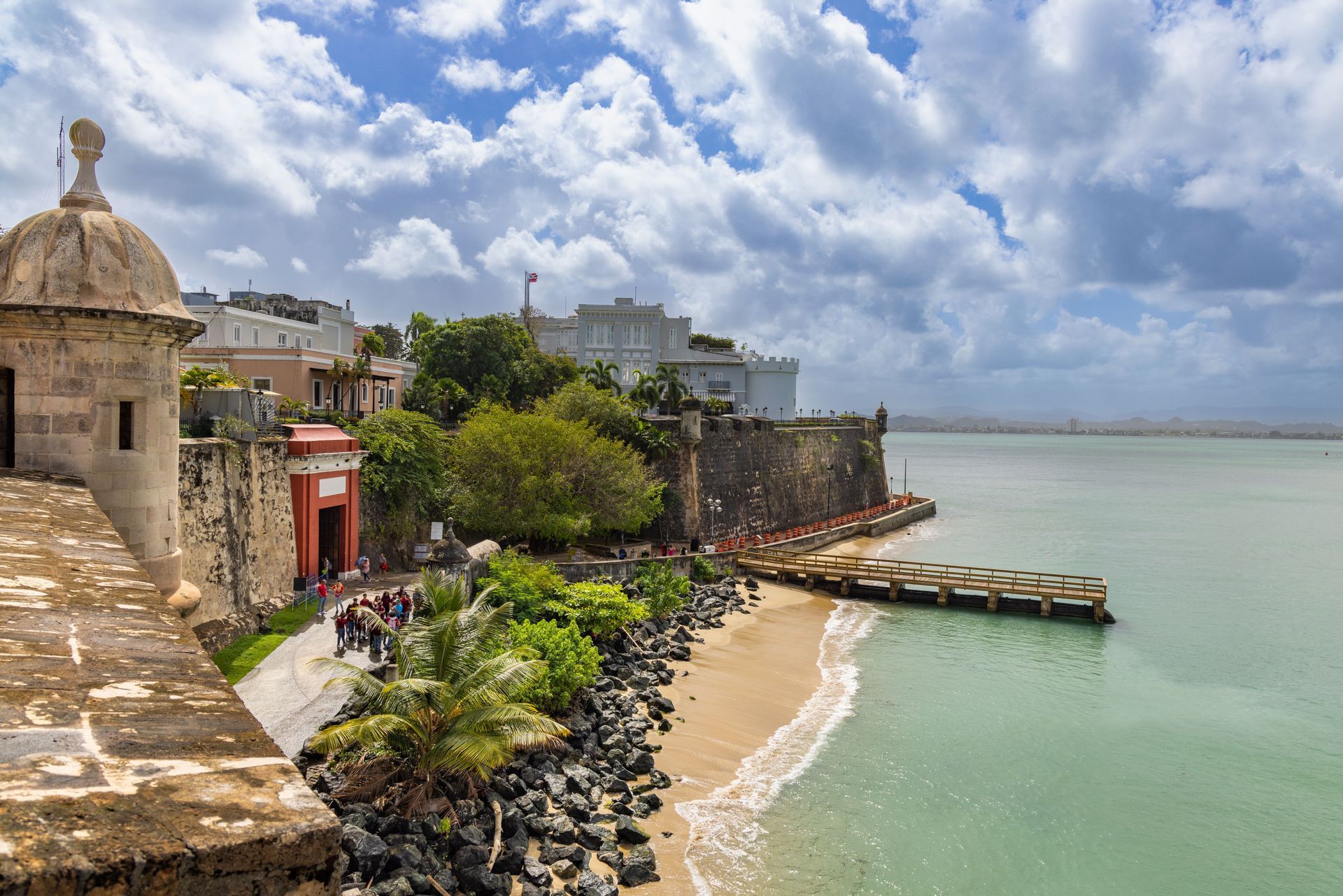
Today, that history isn't tucked away inside museums—it's woven into the fabric of the city itself. Massive stone walls still stand guard over Old San Juan, blue cobblestone streets continue to welcome visitors from around the world, centuries-old churches remain active places of worship, and historic government buildings are still very much in use. Rather than preserving its past behind velvet ropes and glass displays, San Juan simply lives alongside it.
That blend of history and everyday life is what makes the city so memorable. It's authentic in a way that's hard to describe until you've experienced it for yourself. One moment you're walking through streets that have existed for hundreds of years, and the next you're passing a neighborhood café filled with locals catching up over coffee. It's that seamless mix of old and new that gives San Juan a character unlike anywhere else in the Caribbean.
Easy to Visit for U.S. Travelers
First Impressions of Old San Juan
Ask anyone who has been to San Juan what stands out most, and there's a good chance they'll tell you it's Old San Juan. It's the heart and soul of the city—a place where history, culture, and everyday life come together in a way that's hard to find anywhere else.
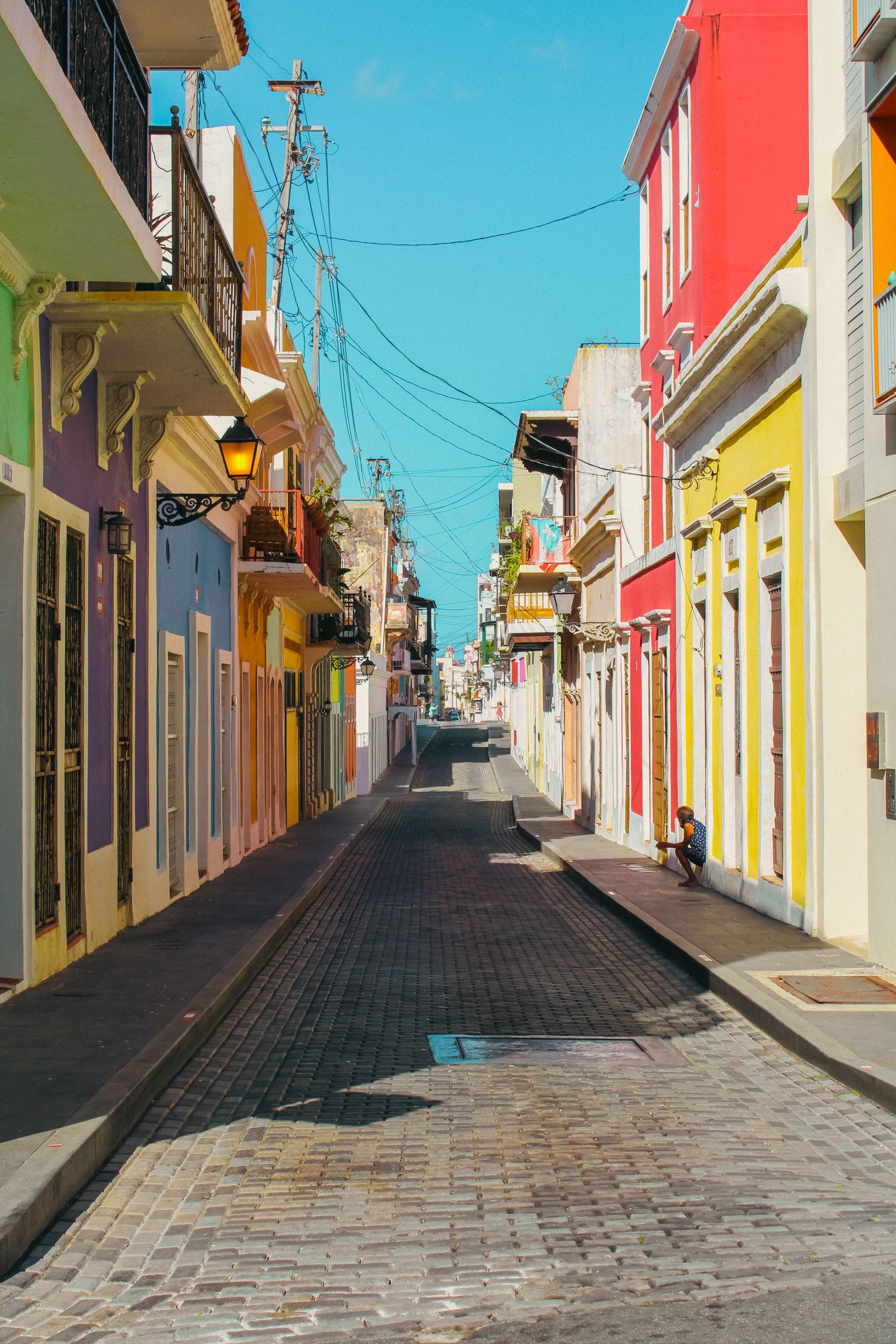
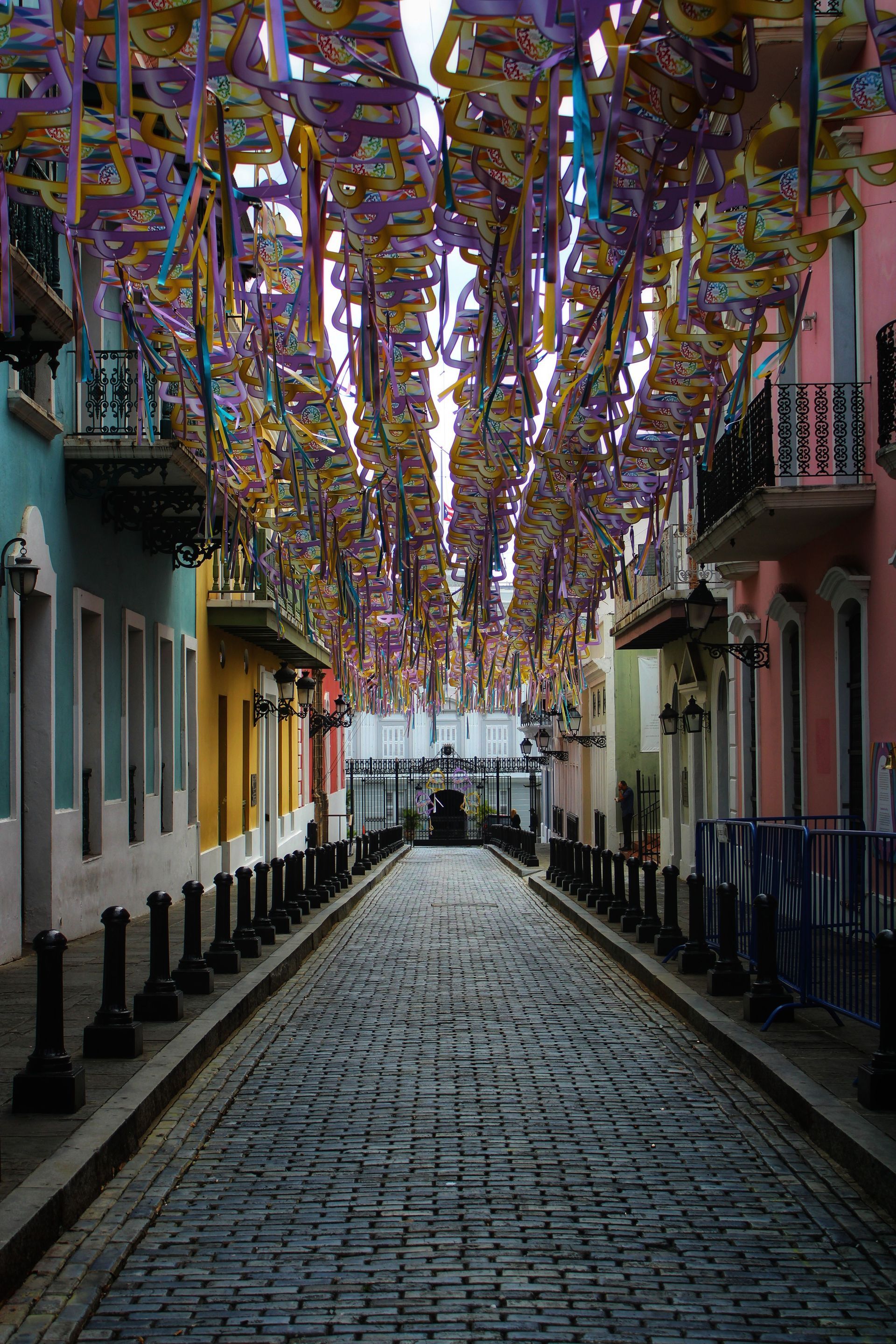
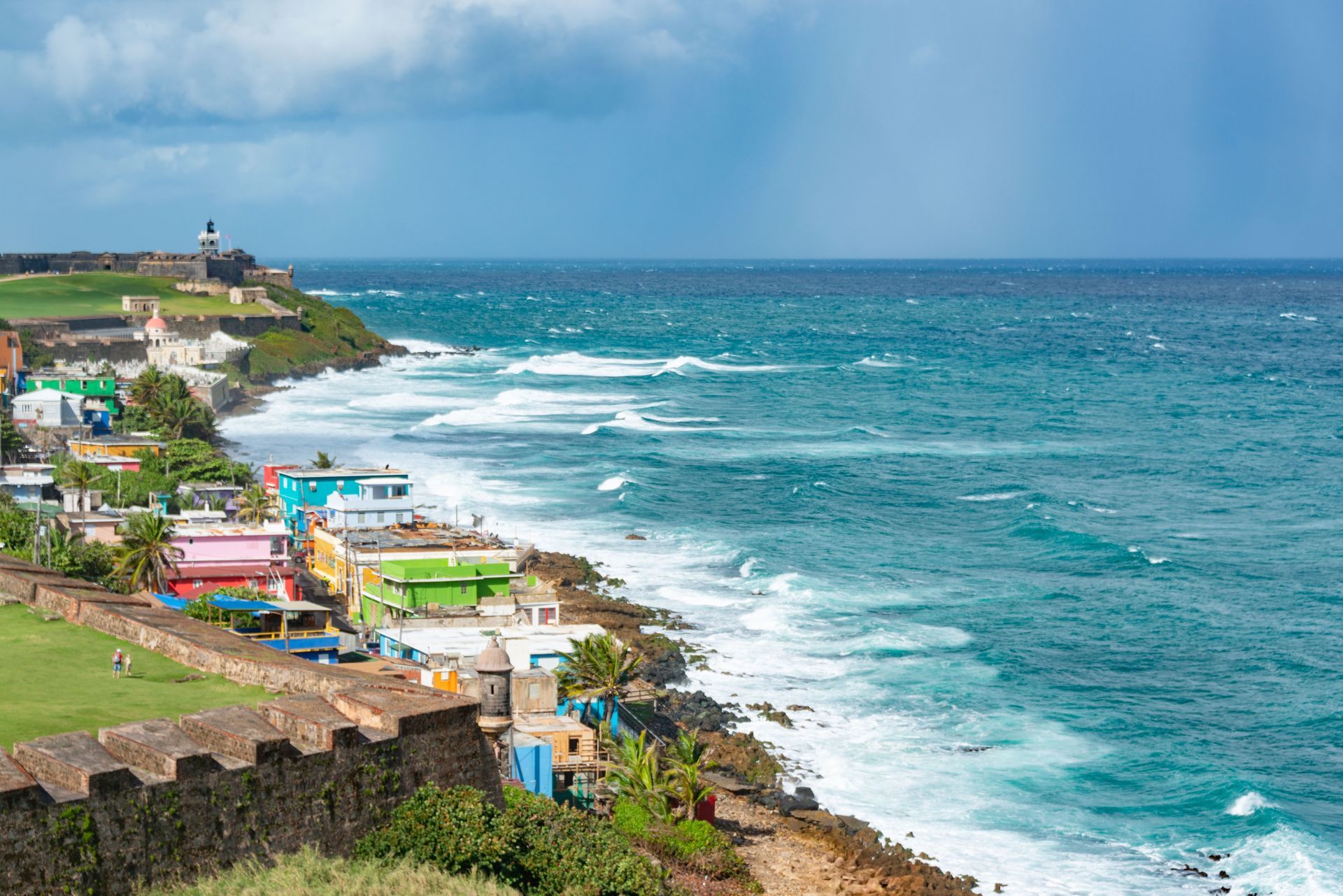
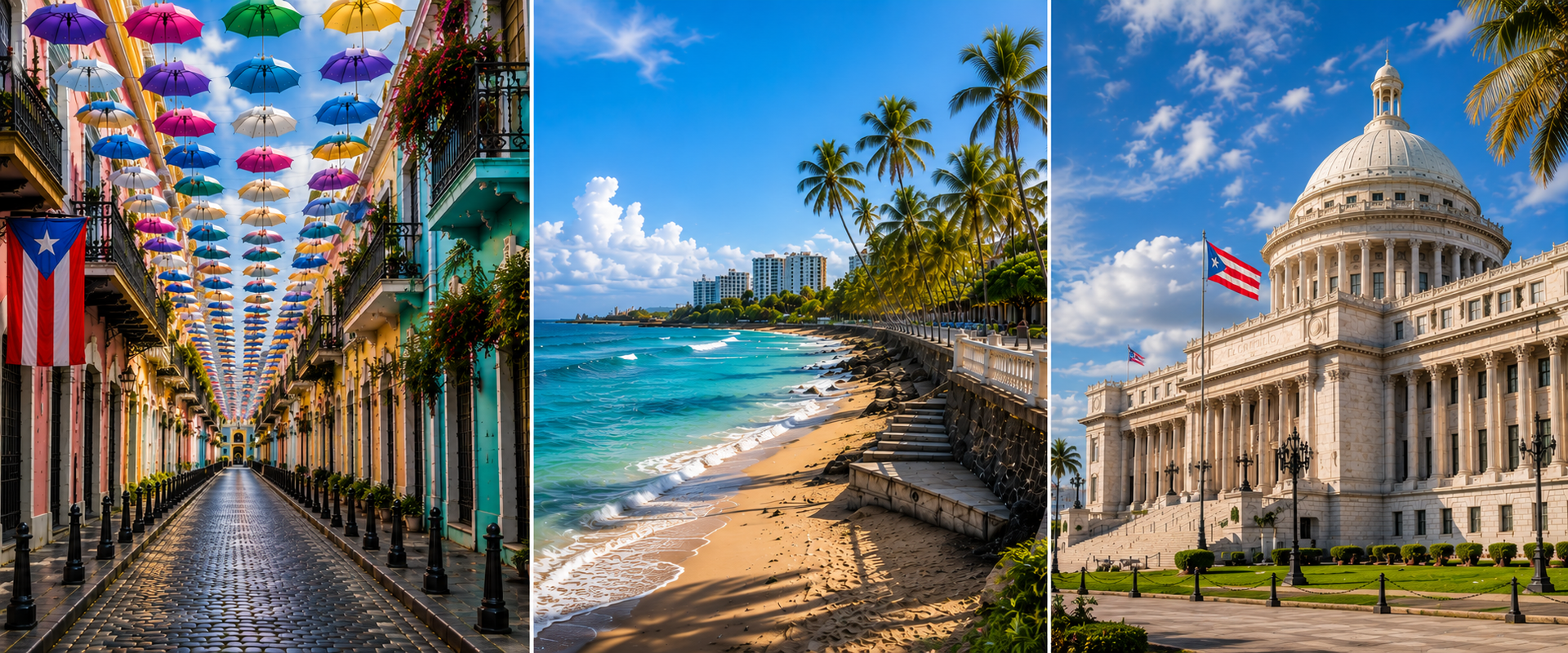
Although the historic district covers just seven square blocks, it never feels small. Every street seems to reveal something new. Colorful colonial buildings painted in shades of blue, yellow, coral, pink, and green line the narrow streets, while wrought-iron balconies overflow with tropical plants and flowers. You might spot a cat stretched out in a sunny doorway, hear the sound of a guitar drifting from a nearby plaza, or catch the aroma of fresh coffee and pastries coming from a tucked-away café.
One of the best things about Old San Juan is that it's incredibly walkable. There's no need to rush from one landmark to the next. In fact, the city almost encourages you to slow down. Unlike some historic districts that have become filled with souvenir shops and chain stores, Old San Juan still feels like a neighborhood where people genuinely live. Residents greet one another on the sidewalks, children play in the plazas, and locally owned boutiques, galleries, cafés, and restaurants far outnumber national brands.
That's part of what makes exploring here so enjoyable. One moment you're admiring the intricate details of a centuries-old wooden doorway or a brightly painted balcony, and the next you've stumbled upon one of Puerto Rico's best coffee shops tucked inside a beautifully restored historic building. Around the next corner might be a local artist displaying their work, a quiet courtyard hidden behind colorful walls, or a scenic overlook with sweeping views of San Juan Bay.
There really isn't a wrong way to explore Old San Juan. Some of the best memories aren't found on a map or guided tour—they happen when you simply wander, follow your curiosity, and let the city reveal itself one block at a time.
The Famous Blue Cobblestone Streets
One of the first things you'll notice while exploring Old San Juan is the city's iconic blue cobblestone streets. They've become one of the area's most recognizable features and are photographed almost as often as the colorful buildings that line them. Beyond their beauty, though, these streets have a fascinating story to tell.
Many visitors assume the stones were quarried somewhere in Puerto Rico, but that's not actually the case. During the Spanish colonial era, ships crossing the Atlantic often carried heavy stones as ballast to help stabilize their journeys. Once they arrived in San Juan and loaded valuable cargo for the return trip to Spain, those ballast stones were no longer needed. Rather than discarding them, they were repurposed to pave the streets of the growing city.
Over the centuries, the stones developed their distinctive blue-gray color, thanks in part to their iron-rich composition and hundreds of years of exposure to the tropical climate. Today, they're far more than just streets—they're a tangible connection to San Juan's long and fascinating history. Every step across them is a reminder that countless others have walked these same paths for generations.
As charming as they are, the cobblestones can be a little challenging underfoot. Their uneven surface and polished finish can become slippery after a rain shower, so comfortable walking shoes with good traction are a much better choice than flip-flops or smooth-soled sandals.
The good news is that Old San Juan isn't a place you'll want to rush through anyway. The city's relaxed pace invites you to slow down, take in the architecture, peek into local shops, stop for a coffee, and enjoy the journey as much as the destination. Those historic streets naturally encourage exactly that kind of exploration.
The Fortresses of San Juan
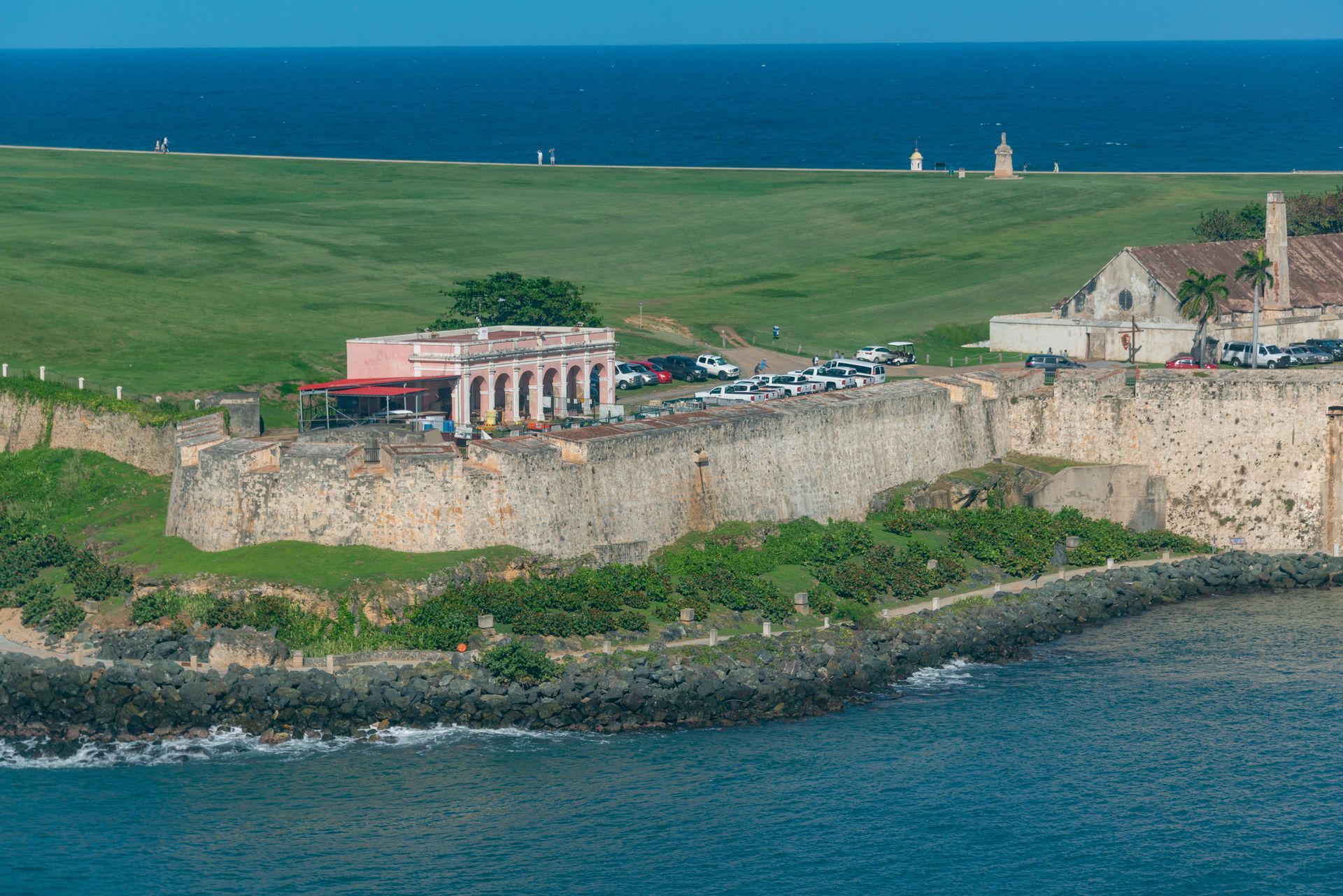
Castillo San Felipe del Morro
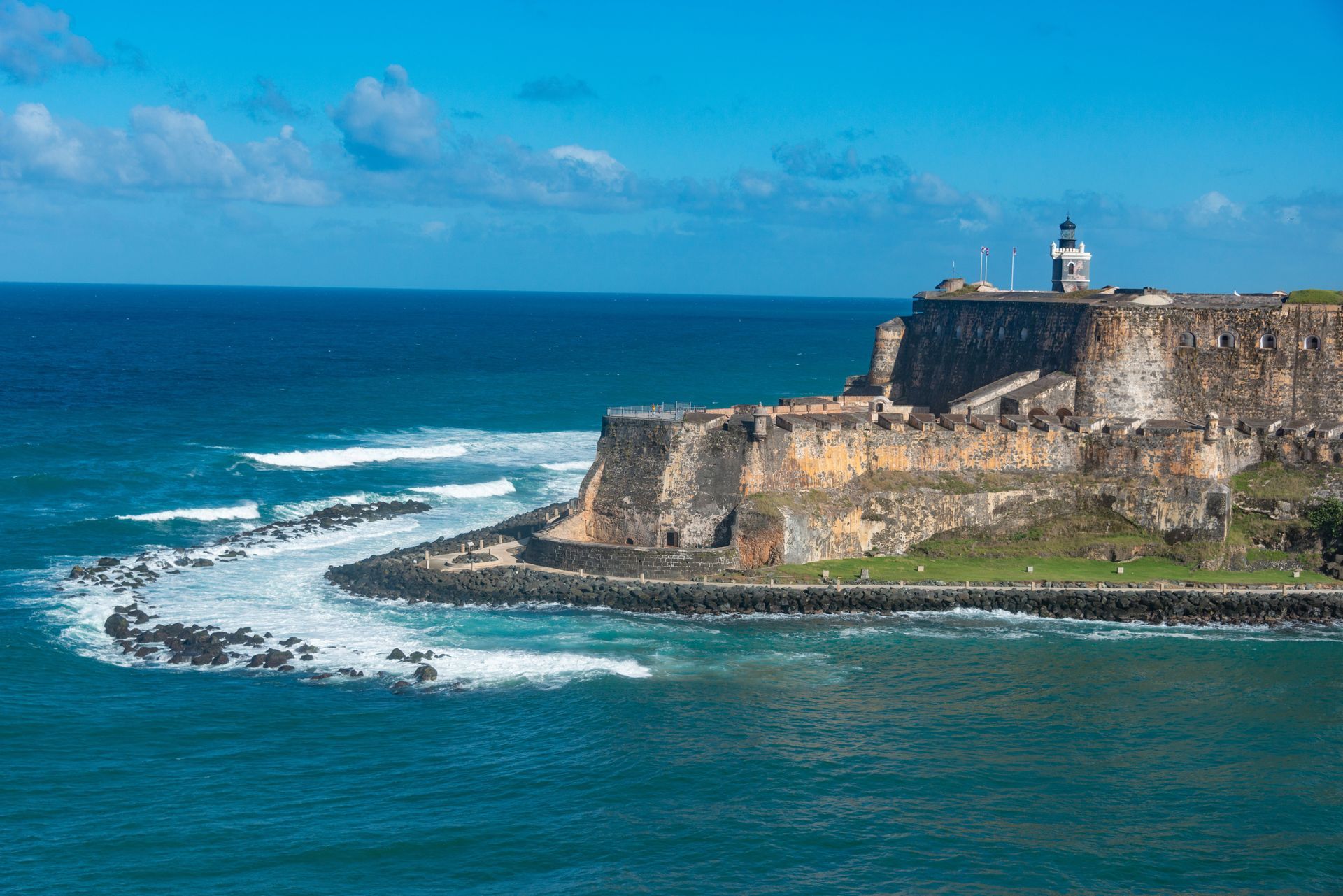
If there's one landmark that has become synonymous with San Juan, it's Castillo San Felipe del Morro—better known simply as
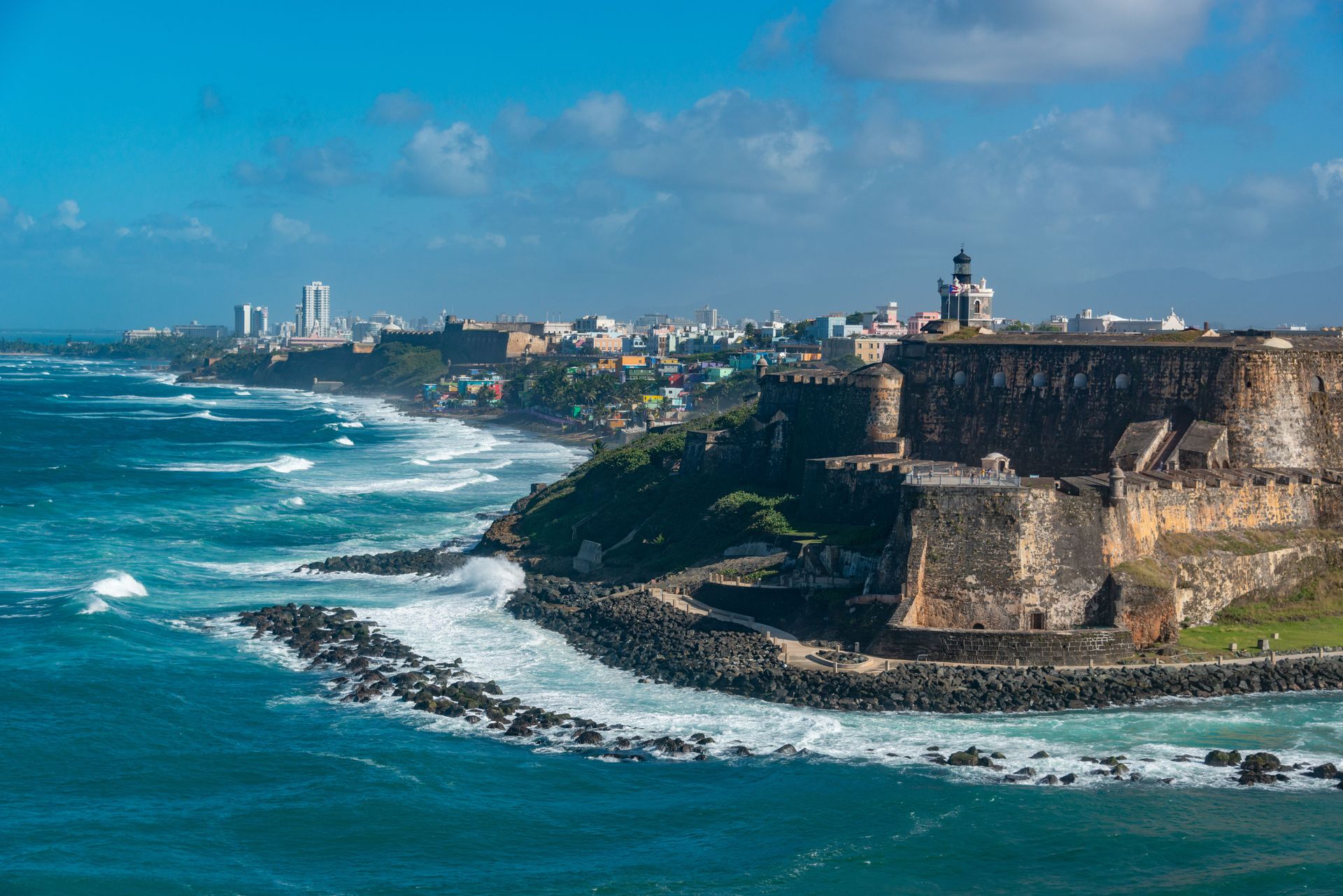
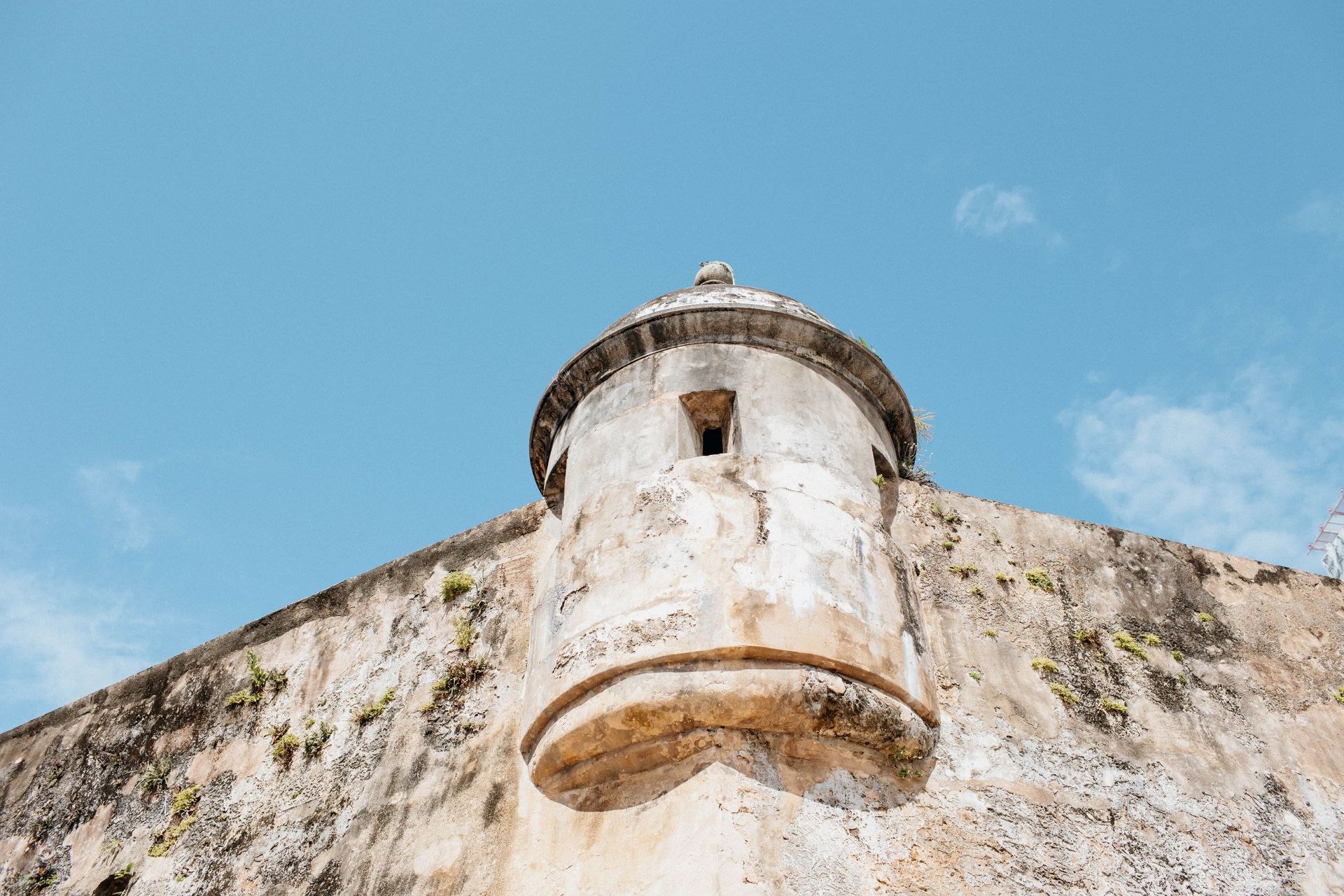
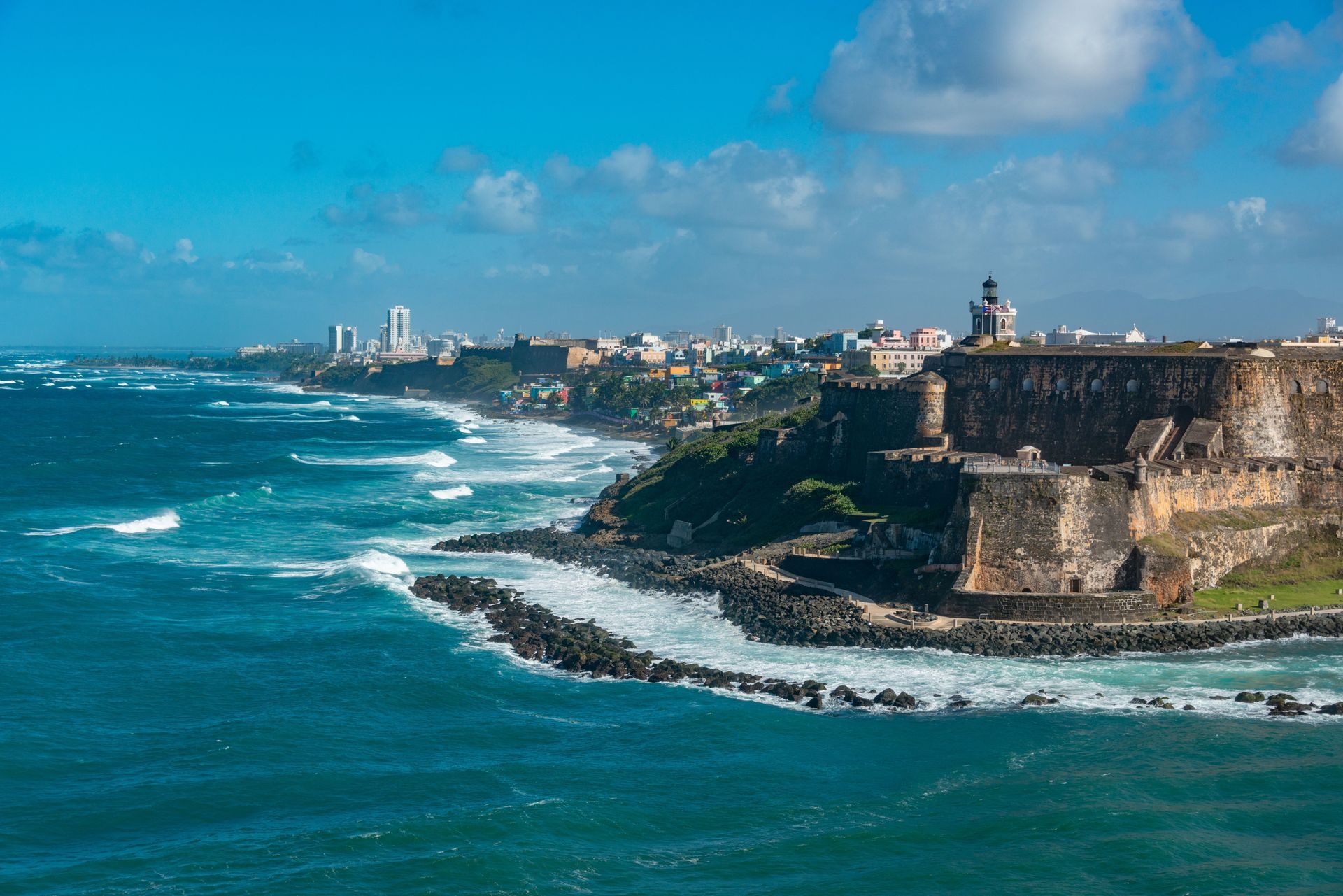
El Morro. Perched high above the Atlantic Ocean, this iconic fortress has watched over the entrance to San Juan Bay for more than four centuries. With its towering stone walls, sweeping ocean views, and unmistakable silhouette, it's one of the first sights many cruise passengers see as they arrive, and one of the last they remember long after they've returned home.
I am a fan of history, so I did not ignore this opportunity to research and learn about El Morro. Construction on El Morro began in the 1500s and continued over several centuries as Spain strengthened its defenses against rival nations and pirates seeking control of the Caribbean. Today, it's recognized as one of the most impressive military fortifications ever built in the Americas and has earned its place as a UNESCO World Heritage Site.
Visiting El Morro is much more than checking another historic landmark off your itinerary. As you walk through its tunnels, climb staircases worn smooth by centuries of footsteps, and stand atop the massive stone ramparts, it's easy to picture life here hundreds of years ago. You can almost imagine soldiers scanning the horizon for approaching ships, cannons prepared to defend the harbor, and generations of Puerto Ricans relying on these walls to protect their city.
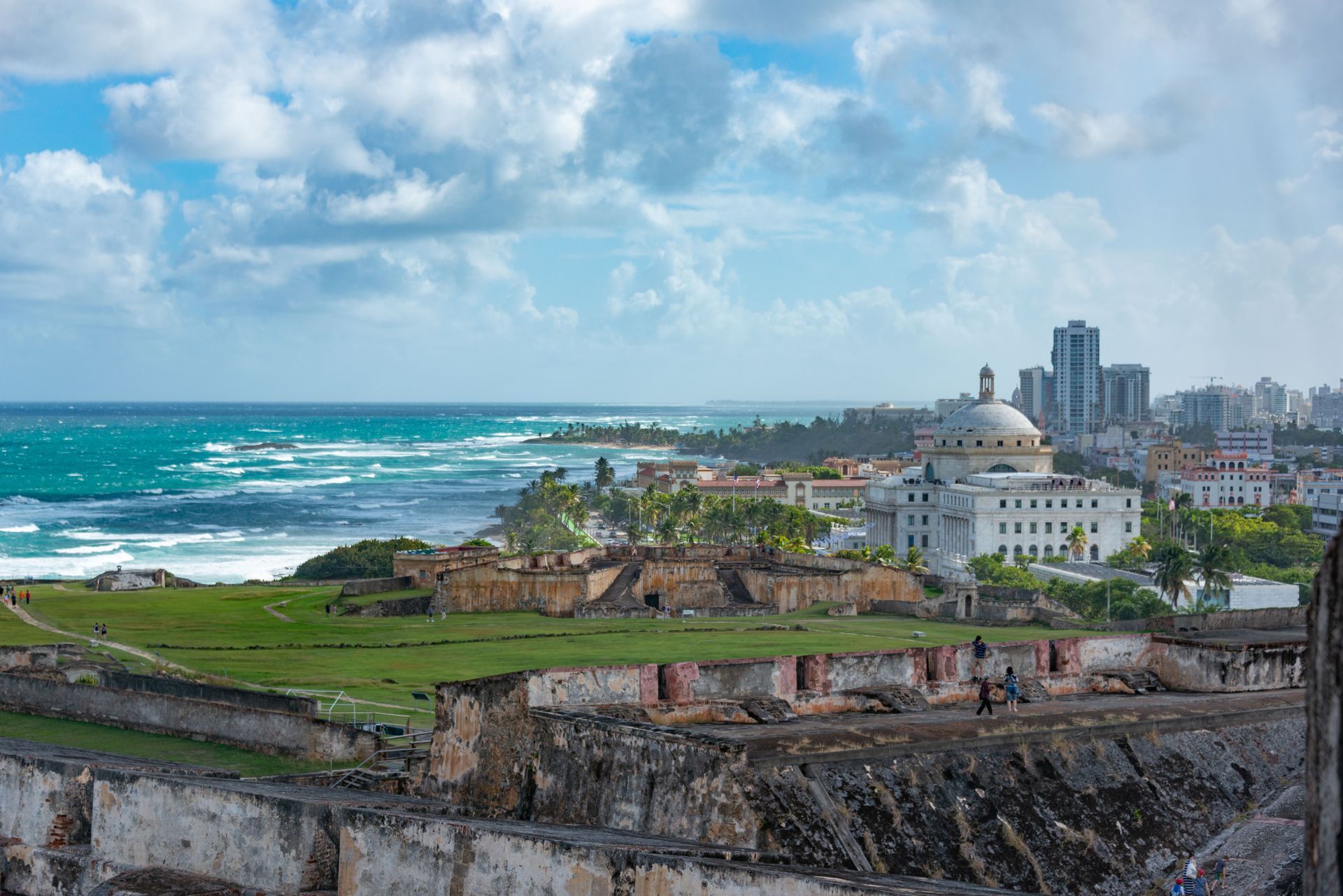
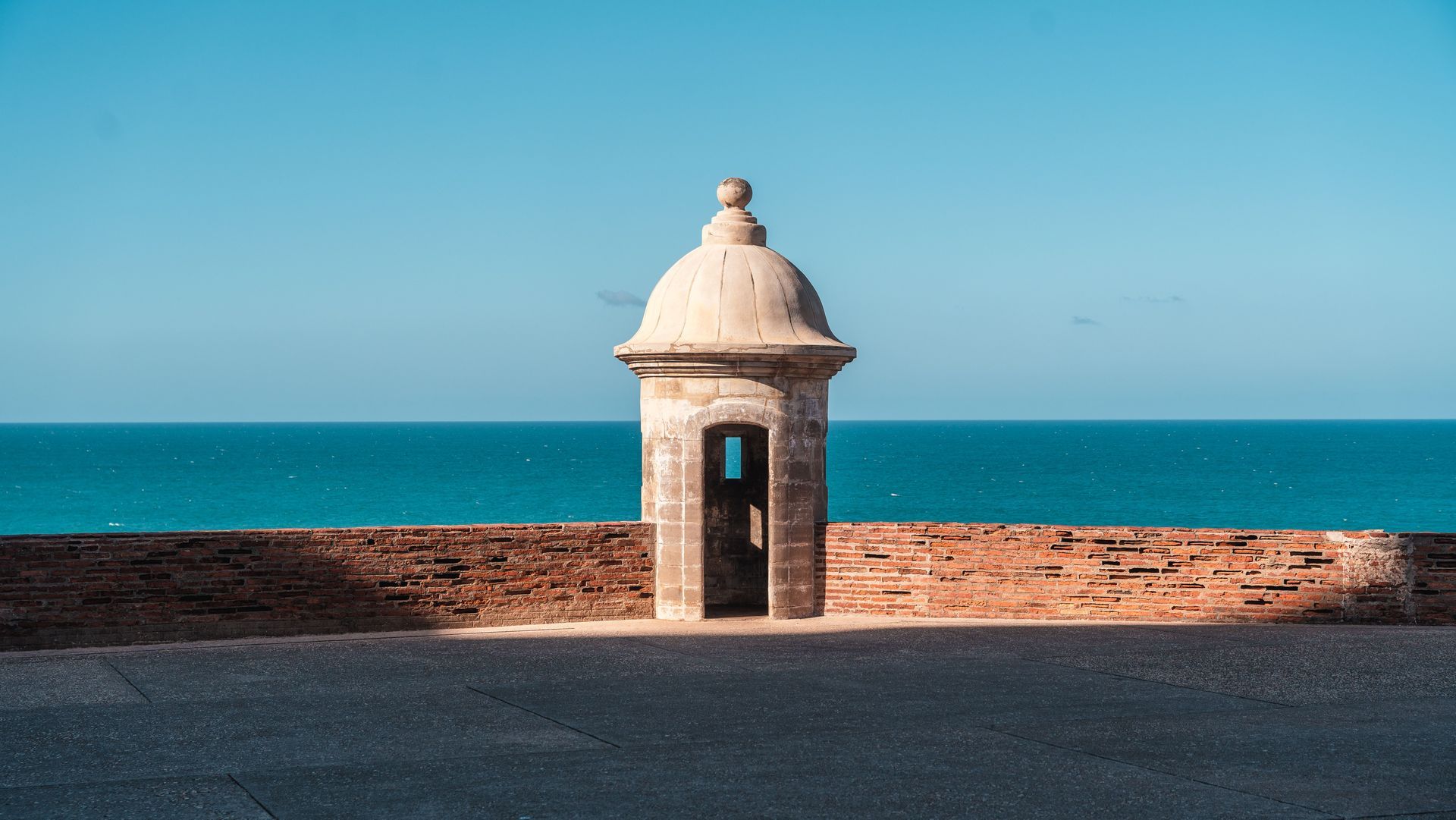
There's plenty to explore during your visit, including six different levels connected by stairways and passageways, enormous defensive walls overlooking the ocean, historic cannon batteries that still point toward the harbor, underground tunnels, sentry boxes, and breathtaking panoramic views of both the Atlantic Ocean and Old San Juan. Whether you're interested in history, architecture, photography, or simply incredible scenery, El Morro delivers an experience that's difficult to forget.
Even visitors who wouldn't normally consider themselves history buffs often find El Morro to be one of their favorite stops. The dramatic setting alone is worth the visit. Standing on the fortress walls as waves crash against the cliffs below offers some of the most spectacular views anywhere in Puerto Rico. After exploring the fort itself, be sure to spend a little time on the expansive grassy lawn just outside its walls. Nearly every afternoon, the open field comes alive with families, friends, and visitors flying colorful kites high above the coastline. Children run through the grass while the ocean breeze keeps dozens of kites dancing against the blue Caribbean sky.
It's a simple scene, but it's also one of the most memorable. Watching laughter and everyday life unfold beside a fortress that has stood for hundreds of years perfectly captures the spirit of San Juan. Here, history isn't something preserved behind glass—it's woven into daily life, creating a city where the past and present exist together in the most natural way imaginable.
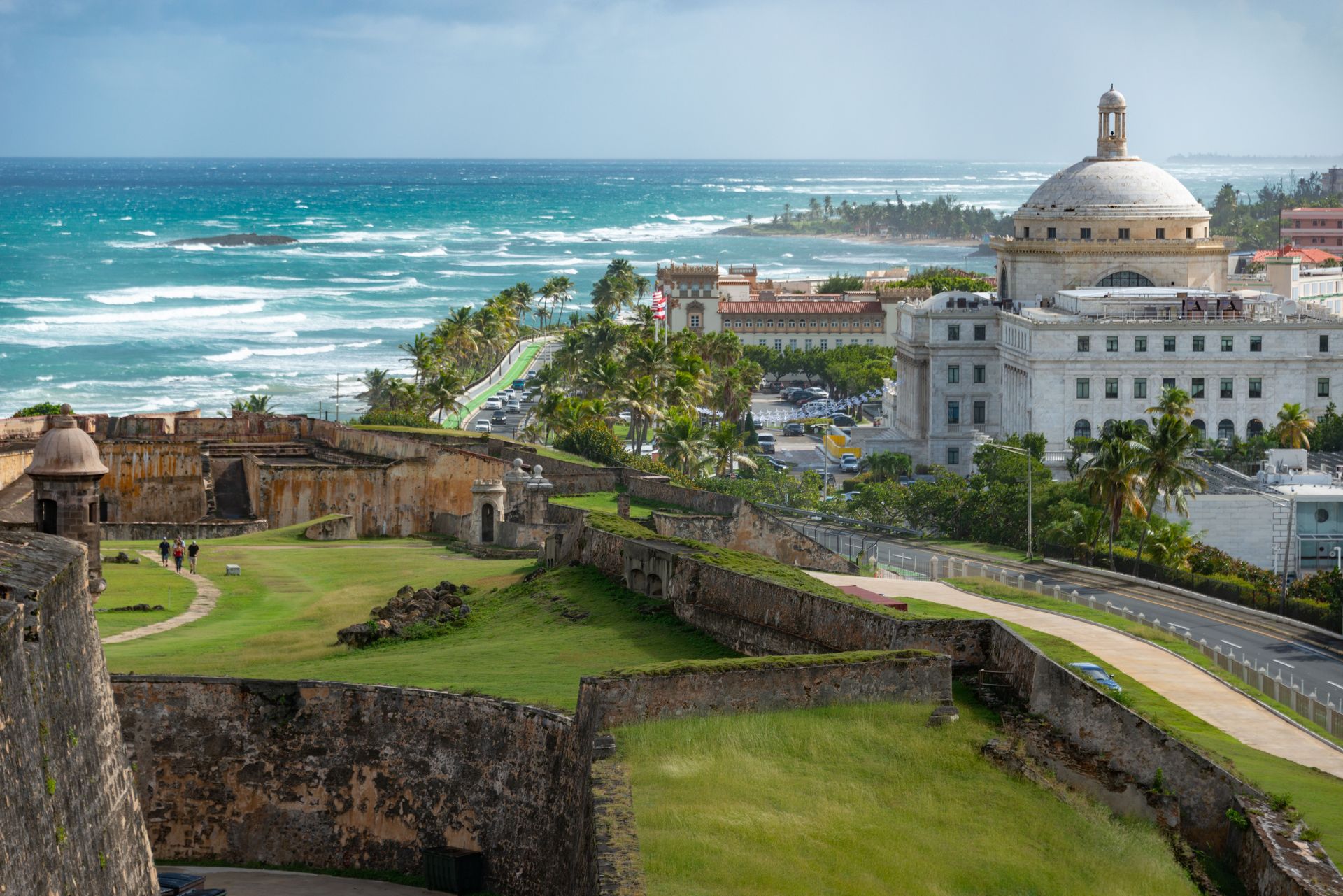
Castillo San Cristóbal
While El Morro tends to get most of the attention, don't make the mistake of skipping
Castillo San Cristóbal. In fact, it's the larger of San Juan's two historic fortresses and offers a completely different perspective on the city's fascinating military history.
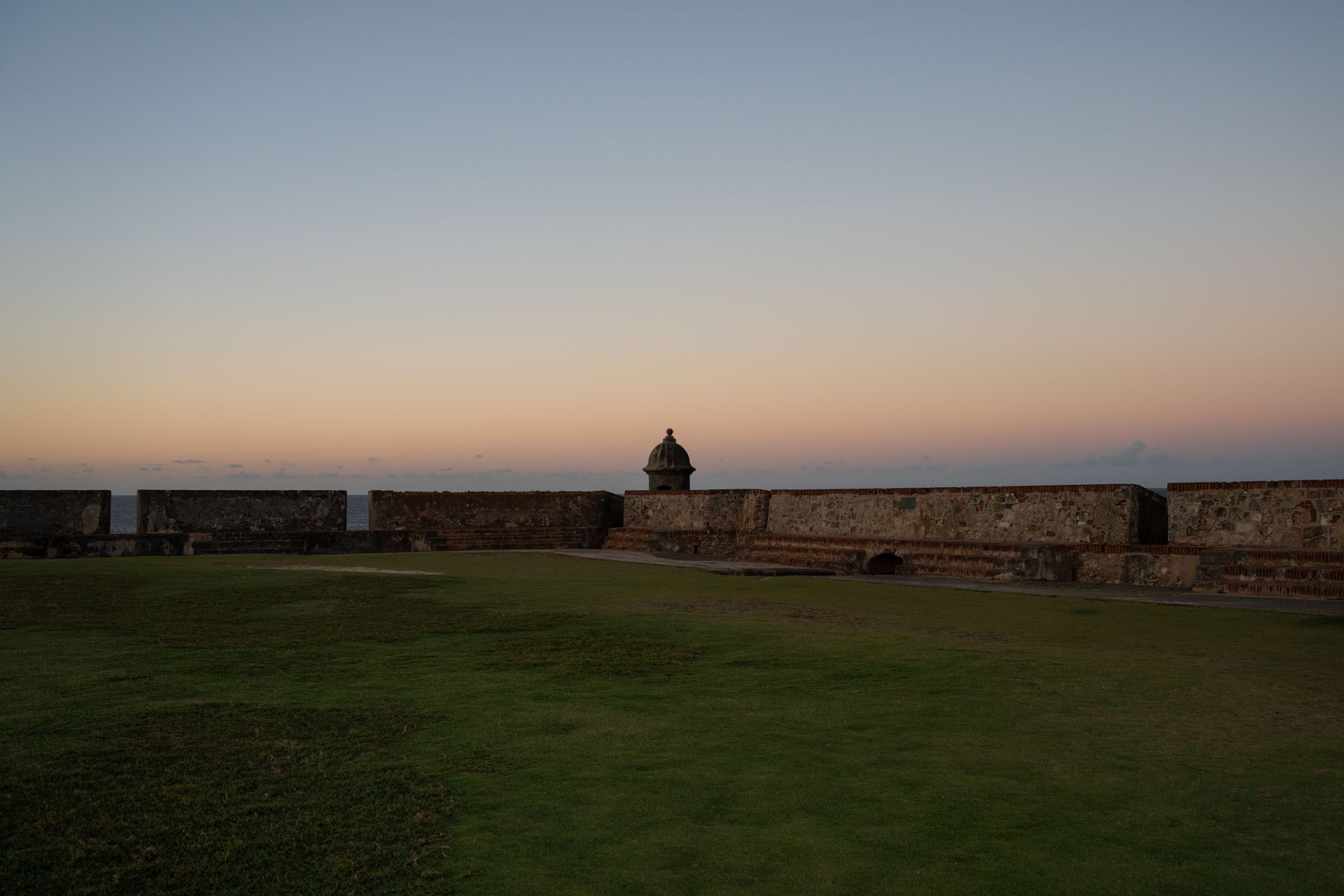
Where El Morro was designed to defend San Juan from attacks arriving by sea, San Cristóbal was built to protect the city from enemies approaching by land. Covering nearly 27 acres, it became one of the largest Spanish fortifications ever constructed in the Americas. Its massive defensive system includes miles of walls, underground tunnels, hidden passageways, guard posts, dungeons, and lookout points that demonstrate just how important San Juan was to the Spanish Empire.
The experience here feels noticeably different from El Morro. Instead of dramatic ocean cliffs and sweeping views of ships entering the harbor, San Cristóbal invites visitors to explore a maze of defensive structures that were carefully engineered to withstand attacks from nearly every direction. Walking through its narrow tunnels and open courtyards gives you a real appreciation for the scale and complexity of the fortress, as well as the incredible amount of planning that went into defending the city centuries ago.
Photographers will appreciate the unique angles overlooking Old San Juan and the coastline, while history enthusiasts can easily spend hours discovering the many rooms, passageways, and exhibits throughout the fortress. Even if military history isn't usually your thing, the architecture alone is impressive enough to make the visit worthwhile.
If your schedule allows, I highly recommend visiting both El Morro and San Cristóbal. Together, they tell the complete story of how San Juan became one of Spain's most heavily fortified cities in the New World. While each fortress has its own personality and perspective, they complement one another beautifully and provide a much deeper understanding of Puerto Rico's colonial past.
Since both sites are part of the San Juan National Historic Site and managed by the National Park Service, many visitors explore them on the same day. The combination makes for one of the most rewarding historical experiences you'll find anywhere in the Caribbean—and one that's well worth the time.
The City's Colorful Personality
I think that's what I love most about Old San Juan. Yes, it's incredibly photogenic, but the real beauty goes far beyond the colorful buildings and historic architecture. It's the feeling you get when you're there. The city has a warmth and personality that's hard to put into words until you've experienced it yourself.
As you wander through the streets, it's obvious that this isn't a place that's simply been preserved for tourists. People live here, and they genuinely care about it. Homes are painted in bright, cheerful colors, balconies overflow with tropical flowers, and even the smallest details—an old wooden door, a quiet courtyard, or a hand-painted sign—seem to tell part of the city's story. Everywhere you look, there's something that makes you want to pause for just another minute.
One of my favorite things about Old San Juan is its pace. It's lively enough that there's always something happening, but it never feels rushed or overwhelming. You'll hear musicians playing in the plazas, laughter coming from sidewalk cafés, and church bells echoing through streets that have been welcoming visitors for centuries. Add in the ocean breeze drifting between the buildings, and it's the kind of place where you almost forget to check the time.
Before long, you find yourself slowing down without even realizing it. Maybe you stop for another cup of Puerto Rican coffee because the café is too charming to leave. Maybe you wander into a small gallery you hadn't planned to visit or spend a few extra minutes watching the sunset over San Juan Bay. Those little moments often end up being the ones you remember most.
That's really what makes Old San Juan special. It reminds you that travel isn't always about seeing as much as possible—it's about experiencing a place for what it is. Some destinations are all about the bucket-list attractions. Old San Juan certainly has those, but its real magic is found in the moments in between. It's in the conversations with locals, the quiet side streets you discover by accident, and the feeling that, even for a little while, you've become part of the rhythm of the city.
Long after you've unpacked your suitcase, those are the memories that tend to stick with you. And if you're anything like me, you'll probably find yourself thinking about when you can come back.
Wrapping up Part 1
Old San Juan is more than Puerto Rico's most famous neighborhood—it's the heart of the island's story. From centuries-old forts and iconic blue cobblestone streets to colorful colonial architecture and lively plazas, every corner offers a glimpse into the city's rich history and vibrant culture. Take your time, wander without a plan, and let the city reveal itself one street at a time. In Part 2, we'll trade the historic streets for sun-soaked beaches, incredible local cuisine, live music, and the experiences that make San Juan one of the Caribbean's most unforgettable destinations.